
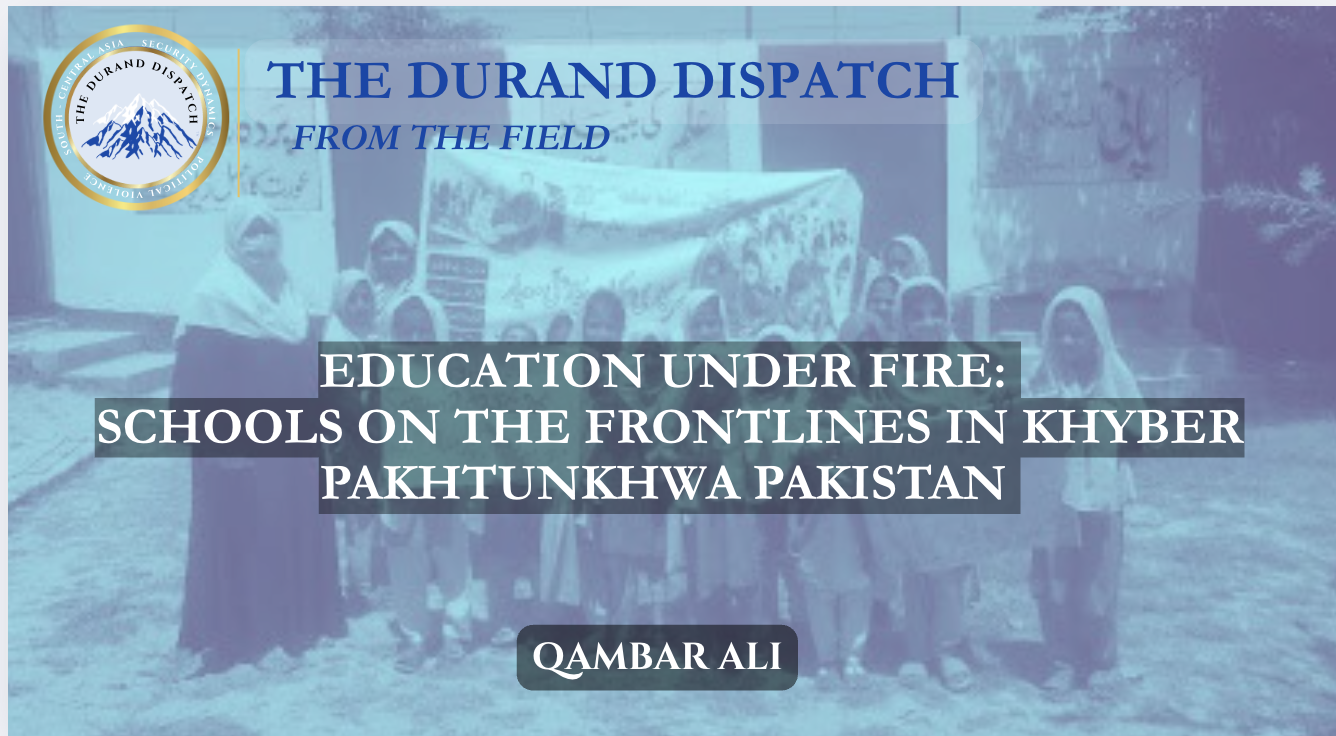
In Pakistan’s conflict-affected northwest, education—especially for girls—has become both a casualty and a battlefield. While state officials pledge reforms and families cling to hope, the reality on the ground tells a more sobering story. In Khyber Pakhtunkhwa (KPK), Pakistan, rising militancy, chronic neglect, underdevelopment and cultural constraints are converging to undermine educational access and quality.
In this report for The Durand Dispatch, Qambar Ali traces the lived experiences of students, teachers, and communities navigating a fragile education system —offering insight into how insecurity, poverty, and governance failures are shaping the futures of millions.
The Malala Paradox
The world first turned its gaze toward Khyber Pakhtunkhwa (KPK) in 2012, when Malala Yousafzai was shot by militants for daring to speak out about girls’ education. Her survival and subsequent rise to global prominence as a Nobel Peace Prize winner spotlighted the courage and resilience of young girls fighting for their right to learn in one of Pakistan’s most volatile regions. Yet, even as Malala became a global icon, the conditions she once spoke out against persist—and in many areas, they have worsened. She remains a polarizing figure in her home province: celebrated abroad, but locally accused by some of undermining Pashtun cultural values. This tension reflects a broader reality—education in KPK, especially for girls, continues to be both a symbol of hope and a battlefield of ideology, honor, and survival.
Subscribe to read this Observer article
Create an account and subscribe to read the full piece, plus access the complete archive.
Already a subscriber? Sign in