
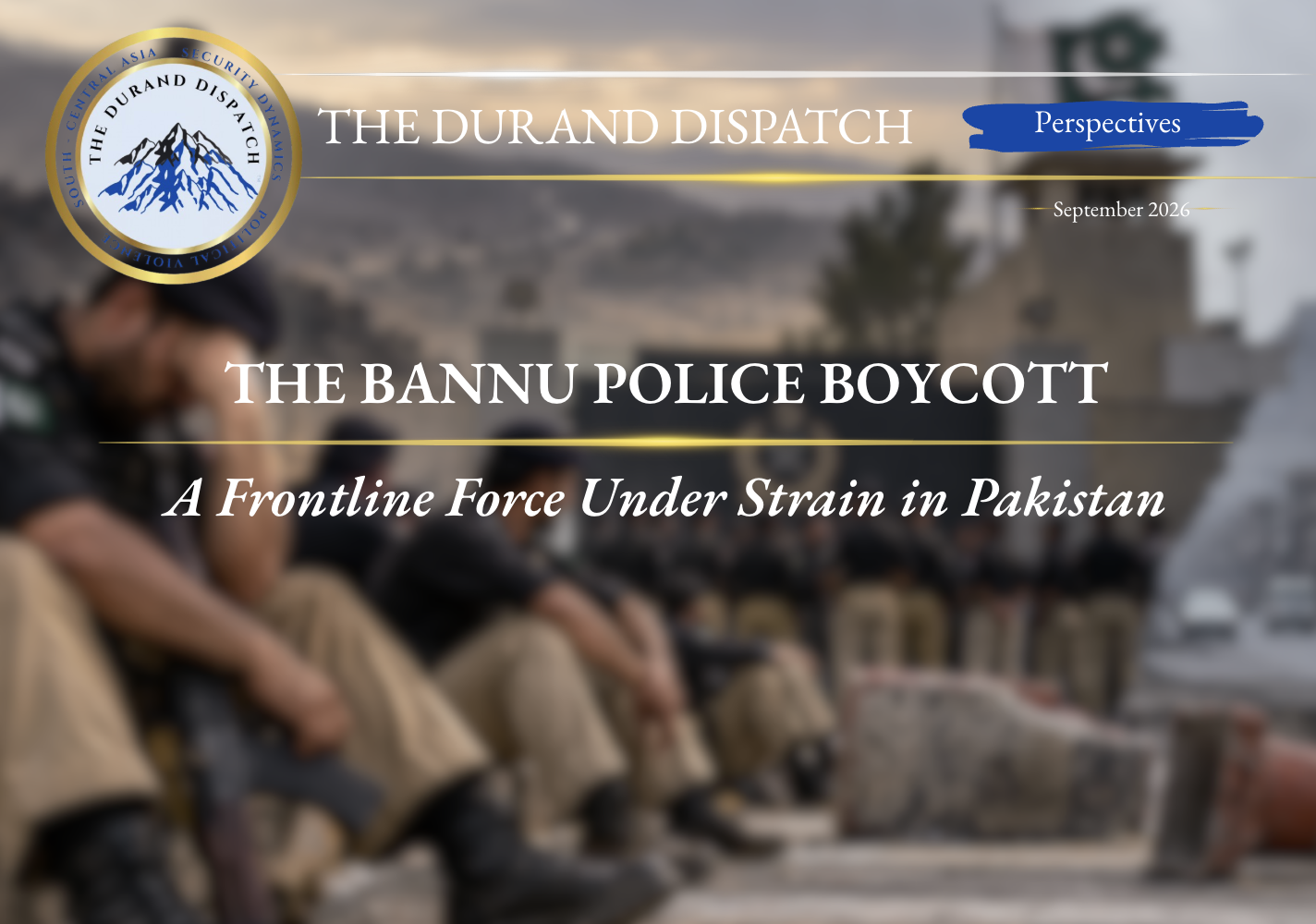
In Khyber Pukhtunkhwa embattled southern districts, the police are simultaneously the targets of militancy, the instrument of state policy, and lately, protesters themselves.
On August 25, 2026 police personnel in Bannu, Khyber Pakhtunkhwa (KP) gathered at the district police lines and boycotted their duties. The trigger was bureaucratically mundane: transfer orders, issued by the Central Police Office in Peshawar on the directives of the Additional Inspector General. They moved seven police personnel, serving in units from Bannu, Lakki Marwat, and Lower Dir to the Elite Force in Peshawar, to postings as distant as Upper Chitral, Shangla, and Swat. The response was anything but mundane. The Police Peace Committees of the three southern districts called on the affected personnel to report to the police lines and stop working. Security deployment at sensitive sites thinned; traffic snarled across Bannu and Lakki Marwat as traffic police walked off their points. The committee’s head, Hazratullah, claimed that the transfers were, in his view, an attempt to weaken the Police Peace Committee itself, vowing the boycott would continue until they were reversed.
Within days, the standoff escalated further before settling, with the committee agreeing to stop protesting. The episode was brief. What it revealed about the state of KP’s frontline force is not.
Subscribe to read this Perspectives article
Create an account and subscribe to read the full piece, plus access the complete archive.
Already a subscriber? Sign in